

Healthy Relationships – Benefits, Signs, Requirements, and Tips – A Comprehensive Guide by Dr. Anil Rai
Last Updated:
In the relentless pursuit of professional milestones and digital efficiency, we often overlook the very foundation that sustains our vitality, that is, our connections with others.
Having healthy relationships is not merely a social luxury; it is a biological and psychological necessity that dictates our long-term health, mental clarity, and resilience against burnout.
This in-depth article serves as a comprehensive roadmap for navigating the complexities of human connection through the lens of Ayurvedic wisdom and modern psychological insights. Whether you are managing a global team or navigating the delicate dynamics of a multi-generational household, the principles of equanimity and conscious engagement remain the same.
Key Takeaways:
- Relationship as a Health Metric: Quality connections are more predictive of physical longevity than IQ or social class, serving as a primary defense against chronic stress and systemic inflammation.
- Beyond the Romantic Lens: A healthy relationship encompasses ancestral roots, professional synergy, and a deep connection with nature, requiring a shift from superficial attraction to emotional maturity.
- The Power of Conscious Parenting: Healing generational cycles through mindful interaction with children is essential for preventing future “modern dis-easiness” and fostering long-term family stability.
- Social Fitness: Applying principles like Sadvritta (righteous living) and understanding Dosha dynamics can harmonize friction points in both marriage and the workplace.
- Solitude vs. Loneliness: True healing involves distinguishing between the stress of isolation and the restorative power of solitude, eventually leading to a state of inner peace and nature-aligned living.
- Key Takeaways:
- The Multi-Dimensional Definition of Healthy Relationships
- Why We Need Each Other to Thrive?
- Role of Family and Multi-Generational Bonds
- Cultivating Meaningful Depth in Couple Relationships
- Nurturing the Future: Parenting and Professional Ties
- Ayurvedic Wisdom for Relationship Longevity and Inner Peace
- Frequently Asked Questions (FAQs):
- Conclusion
The Multi-Dimensional Definition of Healthy Relationships
Defining a healthy relationship requires us to look beyond the modern, narrow focus on romantic couples and view connection as a vast ecosystem that sustains our “Agni” or inner fire.
Beyond the Couple – A Holistic View
The word “relationship” has been unfairly localized to mean only romantic or sexual partnerships in contemporary dialogue.
In reality, our lives are a web of interconnected threads – from our bond with our ancestors and siblings to our daily interactions with colleagues and even the environment.
For a professional navigating a high-pressure career, recognizing that their relationship with their “time” and their “digital devices” is as impactful as their marriage is the first step toward reclaiming inner calmness.
True health is found in the harmony of these various circles. When we expand our definition, we begin to see that a strained relationship with a sibling or a lack of professional synergy can be the hidden root cause of chronic fatigue or “unexplained” anxiety.
Healing starts by acknowledging every person in our ecosystem as a mirror to our own inner state of balance or imbalance.
Signs of Unhealthy Relationship Dynamics
An unhealthy relationship is often characterized by a consistent drain on energy rather than its fulfilment. It manifests as emotional instability, where one feels they are constantly “walking on eggshells” or suppressing their true self to maintain a fragile peace.
For many passionate growth-driven professionals, these toxic patterns are often disguised as “high-stakes competition” or “family duty,” leading to a state of chronic stress that Western diagnostics often fail to categorize.
Common red flags include:
- Feeling unable to share failures or vulnerabilities without fear of judgment.
- Interacting only when a need must be met, rather than for the intensity of a true, meaningful connection.
- Small disagreements escalating into days of silence or emotional withdrawal.
- Losing sight of one’s own values and “Prakruti” (nature) to satisfy the demands of another.
Pause for a while, recall, and observe if there are any such barriers in your relationships – including but not limited to a couple tagged connections.
If you find such signs, you need not worry. Read the full guide with 100% attention, and you’ll get many useful insights to remove the friction-creating barriers of relationships.
The Indian Cultural Perspective: Samabhava and Sambandha
In the Indian tradition, relationships are viewed through the prism of Sambandha – a binding connection that carries both Karma (performing duties) and Dharma (deeply understanding the fundamentals of life and its source).
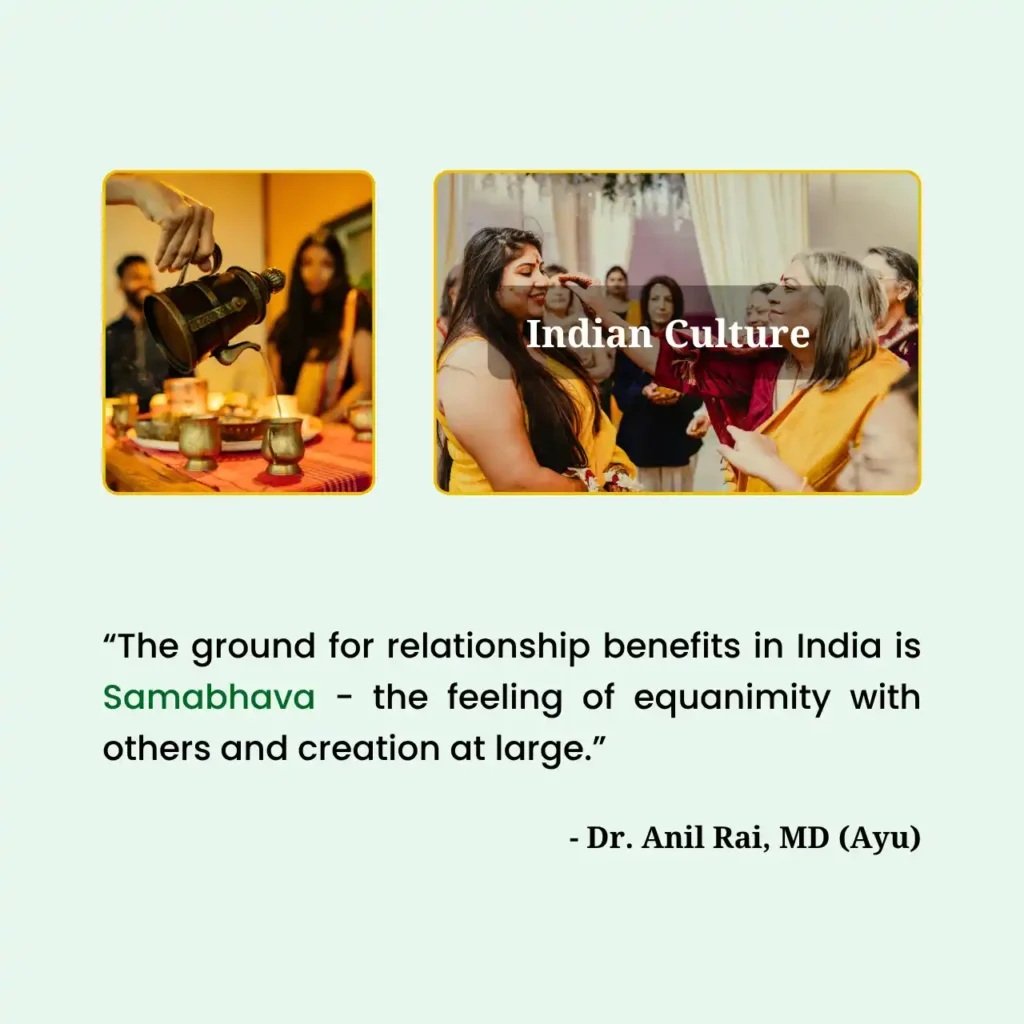
The ancient texts emphasize that our social health is inseparable from our physical health, suggesting that “right living” (Sadvritta) includes treating guests with respect and honoring elders as living bridges to our heritage. This perspective encourages a long-term view of relationships, prioritizing stability and shared values over the fleeting “sparks” of teenage attraction.
This cultural ethos also introduces the concept of Atithi Devo Bhava and the importance of community contribution. For the NRI community or those in Tier 1 cities, reconnecting with these traditional values of “root-cause” healing in social dynamics can provide the equanimity needed to navigate modern-day chaos.
It reminds us that we are part of the world, reducing the burden of the “individualistic” stress that characterizes the digital age.
Why We Need Each Other to Thrive?
Science is finally catching up with ancient wisdom, proving that our social “fitness” is a stronger predictor of a long life than our cholesterol levels or wealth.
Let’s look at it closely.
Insights from the Harvard 85-Year Study on Happiness
The Harvard Study of Adult Development, the longest-running study on human happiness, has revealed a groundbreaking truth: the quality of our relationships is the most significant factor in our physical and mental health.
Following participants for over eight decades, researchers found that those with strong, supportive connections lived longer, stayed sharper, and were more resilient to diseases such as coronary artery disease and Type 2 diabetes.
It wasn’t the number of friends that mattered, but the reliability of the bond – knowing there is someone you could call in the middle of the night.
For individuals with a burning desire to achieve high growth, this study is a sobering reminder that career accolades and financial status (while important) hit a ceiling in happiness once basic needs are met.
The “good life” is built on the warmth of our connections. If your current path involves sacrificing family time for another promotion, you may be inadvertently trading your future physical and psychological well-being for a measurable but ultimately less significant metric.
Recapturing Our Primitive Sync
Humans evolved to be social creatures because isolation was a death sentence in the wilderness. Today, loneliness triggers the same “threat” response in our nervous system, leading to systemic inflammation.
Our relationship with nature is the most fundamental connection we possess, yet it is often the first to be severed in an urban environment. Re-establishing this bond through mindful walking or simply observing the cycles of the day helps recalibrate our internal clock and reduces the “digital fatigue” that plagues the modern visionary.
Here are simple yet powerful reminders.
- Aligning your social interactions with natural light cycles (Sattvic hours) to improve sleep and mood.
- Spending time in green spaces lowers cortisol levels and improves “Prana” flow.
- Recognizing that our bodies are composed of the same elements as the environment, fostering a sense of belonging that transcends social status.
The Healing Power of True Love and Equanimity
True love, in its highest sense, is a healing frequency that balances our internal chemistry.
When you know how to find peace of mind, you approach relationships with a calm mind, and you stop demanding that others “fix” your internal voids and instead offer a presence that is both grounding and transformative.
This level of connection requires a commitment to inner work. By treating our own mind and body with the same care we would a beloved partner, we cultivate the equanimity needed to handle life’s inevitable frictions without spiraling into “modern dis-easiness.”
This internal stability is the true requirement for any external healthy relationship to flourish, allowing us to navigate professional and personal storms with a calm, unshakeable center.
What do you say about the role of love in our daily life? Comment at the end.
Role of Family and Multi-Generational Bonds
The “sandwich generation”- those managing high-pressure careers while caring for both children and aging parents – often feels the most strain, yet these very bonds hold the key to long-term vitality.
Finds relatable?
Grandparents and the Wisdom Bridge
Grandparents and elders are not just family members; they are the keepers of our cultural and emotional lineage.
In a healthy relationship with elders, there is a mutual exchange. They provide the perspective and “slow time” that children need, while the younger generation provides the vitality and care that elders require. This multi-generational interaction prevents the “loneliness epidemic” that often affects both the retired and the hyper-busy youth.
For the modern family, bridging this gap requires intentionality. Despite the physical distances caused by global careers, maintaining a connection with grandparents provides children with a sense of identity that AI and social media cannot replicate. This “wisdom bridge” acts as a stabilizing force, grounding the entire family unit in a shared history that offers resilience during times of transition.
Siblings and Cousins: Building a Lifetime Support Net
While parents are our first mentors, siblings and cousins are our first peers. These relationships are unique because they span our entire lives, offering a level of shared context that even a spouse may not fully grasp.
Investing in these bonds provides a “horizontal” support system that can catch us when “vertical” structures (like career or marriage) feel overwhelming.
Considerable efforts to maintain these connections in a digital world:
- Setting non-negotiable times for family catch-ups that aren’t just about crisis management.
- Moving past “status updates” to discuss real challenges, fostering deeper trust.
- Learning to forgive childhood patterns to build an adult relationship based on current and future values.
Navigating the In-Law Dynamic
Perhaps one of the most stereotyped and complex relationships in the Indian context is that between a mother-in-law and daughter-in-law.
Am I right?

When this bond is healthy, it creates a formidable foundation for the household; when it is strained, it can lead to a “miserable couple relationship” and poor parenting outcomes.
A healthy approach involves moving away from power struggles and toward a “collaborative care” model. By acknowledging the mother-in-law’s experience and the daughter-in-law’s need for autonomy, the family can avoid the “Agni imbalance” caused by domestic stress.
This shift requires conscious communication. If it cannot be done by the family itself, consider approaching an expert who understands the cultural nuances of Indian family life. He/she can help to bring harmony through tailored guidance.
Cultivating Meaningful Depth in Couple Relationships
A healthy and happy relationship between partners is the primary engine of a happy home, yet it is often the first to suffer under the weight of “modern, quickly changing lifestyle and burnout.”
Moving Beyond Superficial Attractions
Finding the right person is not about a checklist of status symbols or the “spark” of teenage attraction. It is about finding a partner whose values and “Prakruti” (innate nature) complement your own.
A lasting bond requires a shared vision for a holistic life, one that prioritizes long-term “root-cause” healing over the temporary highs of social validation.
Relationship maturity means understanding that attraction evolves. The superficial excitement of the early days must eventually give way to a deep, stable intimacy that can survive the pressures of raising children, managing finances, and navigating career shifts.
If a partnership is built only on the “image” of success, it will inevitably crack when the reality of life sets in.
The Husband-Wife Dynamic: Evolving Through Life’s Stages
A marriage is not a static agreement but a living organism that changes as we move from our 30s into our 50s.
During the “Bridge Millennial” and “Gen X” years, couples often face the peak of their professional responsibilities, childhood dream status, inner circle relationship management, and so on.

Without conscious effort, the relationship can become a series of “logistical meetings” about chores and schedules, leading to a profound sense of loneliness even when living together.
To keep the fire alive, couples must prioritize:
- Being in the physical presence should be the highest priority. If not possible often, making sure both are connected, irrespective of physical distance, is highly important – use modern online opportunities wisely.
- Engaging in topics beyond work and children to maintain a mental bond.
- Understanding how each other’s Doshas respond to stress and adjusting intimacy accordingly.
A few more important aspects to consider in a husband-wife relationship.
The evolution of the husband-wife dynamic is currently unfolding against a complex backdrop of shifting global and national trends that reflect our modern “uneasiness in life.”
As per data mentioned on the CDC about marriage and divorce, the landscape of marriage is transforming; while crude divorce rates in the United States have seen a slight decline to approximately 2.4 per 1,000 population as of 2024, the lifetime probability of marital dissolution remains a significant concern in Western societies.
In contrast, India maintains one of the world’s lowest national divorce rates at roughly 1.1%, as documented in the National Family Health Survey (NFHS-5). However, this statistic masks a sharp divergence in urban hubs like Mumbai, Delhi, and Bengaluru, where matrimonial disputes and family court filings have surged by nearly 30% over the last decade.
As recent legal insights for 2025 suggest, the primary drivers, including career-induced burnout, digital fatigue, and the erosion of traditional social support nets, underscore a critical need for moving beyond mere co-existence toward the emotional equanimity and psychological safety that define a truly resilient partnership.
Since it’s an extra attention required matter to be considered, here I’m citing a couple more useful resources related to after-marriage couple relationships.
Emotional Intelligence in Intimacy
Emotional intelligence is the “secret sauce” of a healthy relationship. It involves the ability to regulate one’s own emotions and respond to a partner’s distress with empathy rather than defensiveness.
In the context of successful life seekers and maintainers, this often means learning to “switch off” the professional leader persona when entering the home, allowing for a space of vulnerability and softness.
Maturity also involves the realization that your partner is not responsible for your happiness. By taking personal responsibility for your own mental health and calmness, you bring a more “full” version of yourself to the relationship. This prevents the “codependency” that often leads to resentment and emotional fatigue.
Nurturing the Future: Parenting and Professional Ties
For people who are planning to become parents or already are, striving for betterment of life with a growth mindset, face the challenge of relationship management.
If you’re in that zone, you might have noticed the underlying similarities among growing a child, growing a career, and managing the relationship involved in them, don’t you?
Breaking the Cycle of Generational Trauma
Many of the “deep-rooted childhood issues” seen in adults today stem from well-intentioned parenting that lacked deliberate actions and awareness of what they might lead to.
“Real Parenting” is the practice of being present with a child’s true nature, rather than projecting one’s own unfulfilled ambitions or anxieties onto them. For ultra ambitious achievers, there is often a temptation to push children toward the same “success” metrics that led to their own burnout; conscious parenting offers a path out of this cycle.
Points to consider and remember:
- Acknowledging a child’s feelings without immediately trying to “fix” or suppress them.
- Prioritizing quality time over material rewards fosters a “secure attachment.”
- Showing children that health and equanimity are as important as grades and achievements.
Which of these are already part of your parenting journey?
The Parent-Child Connection Quality
A healthy relationship with one’s child is the greatest investment in their future mental health.
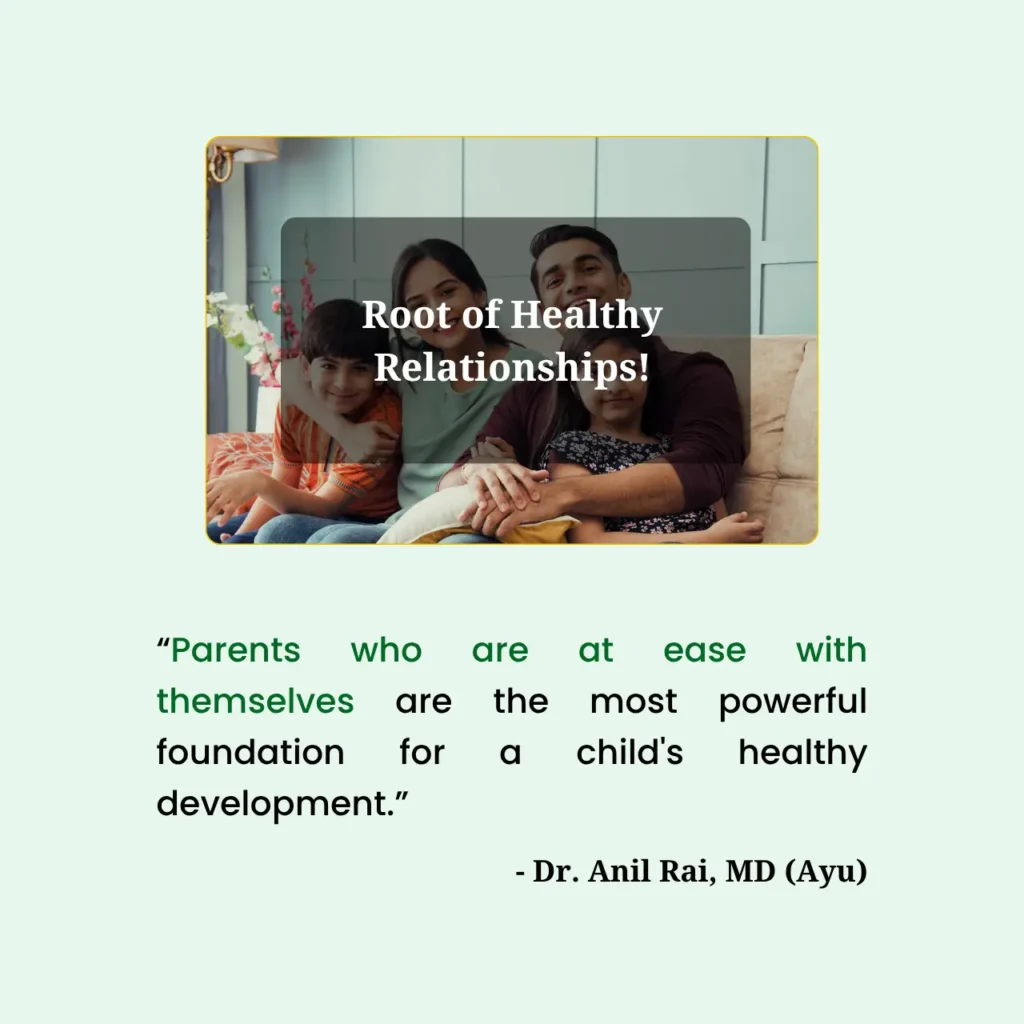
When a child feels truly seen and heard, they develop a “secure base” from which to explore the world. Conversely, “parenting mistakes” like inconsistent boundaries or emotional unavailability can lead to “modern dis-easiness” that manifests decades later as anxiety or relationship struggle.
Conscious efforts not only help the elderly people, but also are beneficial to children to overcome their unexplored miseries. This is the feedback we got from the parents after we helped a child regain interest in life, studies, and a strong bond with parents.
The goal is to create an environment where the child feels safe enough to fail. This requires the parent to have done their own internal work, meaning addressing their own “burnout” and “relationship friction” so they don’t leak that stress into the child’s ecosystem.
The same principle is applicable in career development and managing professional relationships – be it between colleagues or business and consumers.
Professional Relationships: Integrity and Synergy in the Workplace
We spend a third of our lives at work, making professional relationships a critical component of our overall health. Poor mental health at work, often driven by toxic team dynamics or a lack of trust, costs the global economy trillions in lost productivity.
A healthy professional relationship is built on integrity, clear communication, and the recognition that every team member is a human being with their own “peace of mind backed high productivity” needs.
For the visionary leader, fostering “synergy” means:
- Recognizing signs of burnout in your team before they become crises.
- Avoiding the “culture of fear” and encouraging honest feedback.
- Respecting “off-hours” to prevent the digital fatigue that erodes professional creativity.
Modern psychological research highlights a profound “spillover effect,” where the quality of our professional bonds directly dictates our efficacy as parents and partners.
Modern psychological research highlights a profound “spillover effect,” where the quality of our professional bonds directly dictates our efficacy as parents and partners.
According to the American Psychological Association’s recent findings on workplace well-being, high-quality professional relationships and psychological safety act as a primary buffer against “work-to-family conflict,” which is a leading cause of reactive parenting and marital strain.
For the success-driven visionary, career growth is no longer just about technical output but about cultivating the emotional intelligence to navigate office dynamics; when these professional ties are healthy, they preserve the vital emotional bandwidth needed to maintain domestic stability and avoid the “burnout-induced isolation” that often erodes personal connections.
This interconnectedness proves that achieving Inner calmness in the boardroom is a prerequisite for being a conscious, present leader at the dinner table.
Ayurvedic Wisdom for Relationship Longevity and Inner Peace
Solution-oriented Ayurvedic treatments offer a unique lens for understanding why certain people “click” and others “clash,” providing actionable tools for harmony.
How Your Prakruti Affects Your Bond
Every individual has a dominant Dosha (Vata, Pitta, or Kapha) that influences how they give and receive attention in a relationship.
- Vata: Quick and creative, but prone to anxiety. They need grounding and reassurance in a relationship.
- Pitta: Passionate and focused, but can become controlling or “combative” when stressed. They need space and playfulness.
- Kapha: Stable and nurturing, but can become stagnant or over-attached. They need stimulation and movement.
Understanding connected people’s (and your own) Dosha allows you to stop taking their stress responses personally. When a Pitta partner gets “fiery,” you recognize it as an imbalance in their system rather than a personal attack. This knowledge is a powerful tool for maintaining equanimity and preventing the “miserable couple relationship” cycles that drain our vitality.
Similarly, a deep understanding of the nature of the mind – Satva, Rajas, and Tamas makes it significantly easier to manage relationships. But if you’re already facing relationship conflicts, I strictly advise you not to analyze yourself about the nature of the mind and its impact on relationships based on random theoretical information. Because there is a danger of the situation getting even worse, where recovery may be impossible. It’s better to approach an experienced professional who will guide you properly to solve and prevent further damage.
Actionable Tips for Maintaining Healthy Relationships
Maintaining relationships is a daily practice, much like maintaining your physical health through diet and exercise.
Seriously consider and work on these points:
- Focus more on understanding rather than unnecessary quick reactions.
- Regularly expressing appreciation for the small things your partner or colleagues do.
- Engage in activities that promote clarity and peace, such as nature walks or shared meals without screens.
- If a relationship is stuck in a loop of friction, look for the underlying “modern dis-easiness and wrongly interpreted uncomfortable life situations” or “Agni imbalance” that might be fueling it.
How many of these are already part of your relationship management in daily life?
If none, nothing to worry. It isn’t too late to implement. Take action right now.
Linking Body and Mind: The Path to Lasting Equanimity
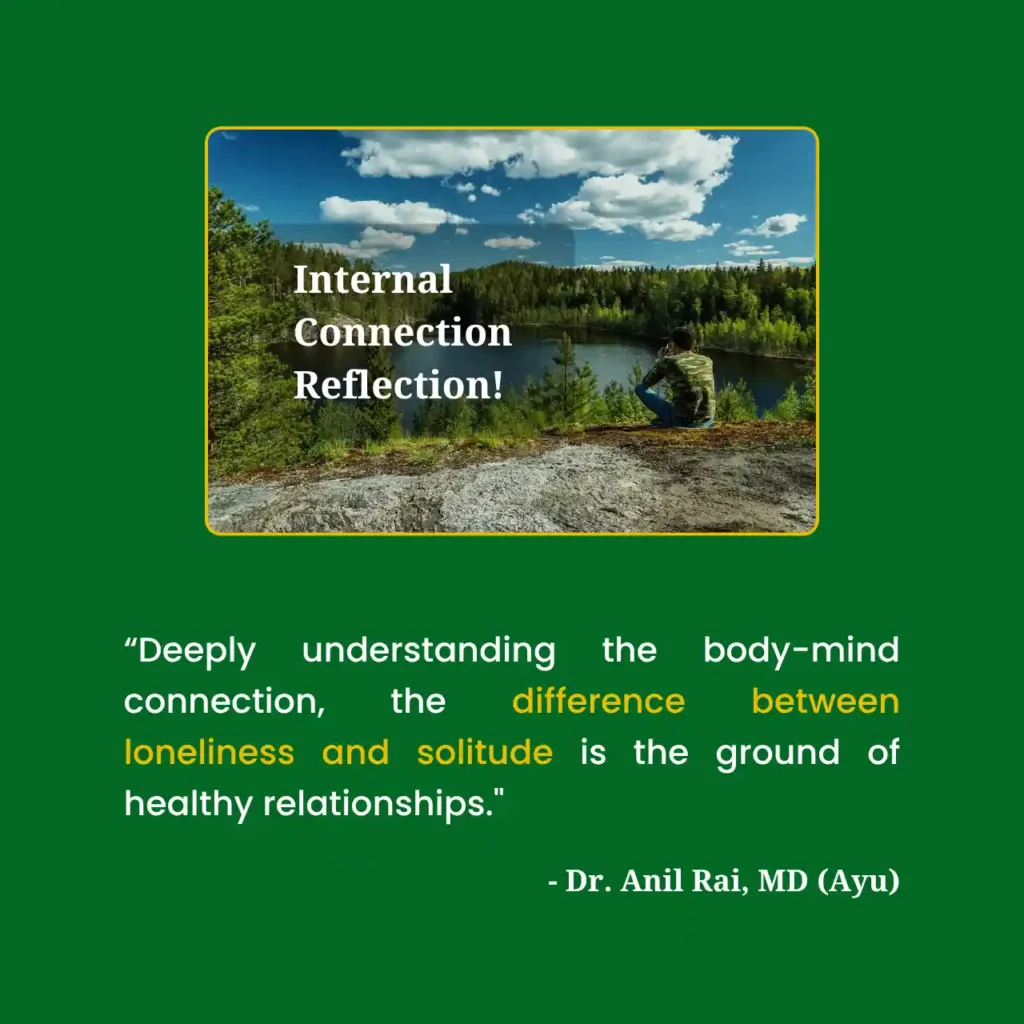
Finally, we must realize that our relationships reflect our internal state. If your body is riddled with toxins (Ama) or your mind is plagued by “wrong social media usage” and “information overload,” your relationships will inevitably suffer. True relationship health is a byproduct of “Inner calmness” or what we desperately need, “Peace of Mind”.
By pursuing Ayurvedic treatments for mind and body, you address the “root cause” of your irritability, fatigue, and emotional fluctuations. This allows you to enter every relationship – whether with a spouse, a child, or a colleague – from a place of abundance rather than lack. This is the ultimate “social fitness” that leads to a long, happy, and truly successful life.
These are essential aspects of a fulfilled life with conflict-free relationships. I hope you have captured useful and implementable insights from this guide.
People do ask several repeated questions in this regard. Let’s look at them.
Frequently Asked Questions (FAQs):
Conclusion
Healthy relationships are not a destination but a continuous journey of self-awareness and conscious connection.
For a person who has a growth mindset, the path to “The Good Life” involves more than just career mastery; it requires the “social fitness” to build deep, lasting bonds across all areas of life.
By integrating the timeless wisdom of Ayurveda with modern insights into the human heart, we can overcome the “dis-easiness” of the digital age and achieve a state of true equanimity.
Remember, the quality of your life is the quality of your relationships – start healing yours from the root today.
Have any questions? Drop it in the comment box below.
Share this detailed guide with your loved ones.
Share via social media

Author
I am Dr. Anil Rai, Ayurvedic Physician and Mental Health Practitioner with over 2 decades of experience and knowledge. I help the needy cure and prevent mental discomfort through natural healing and alternative medicines. Read more about my profession and background. Let’s be connected socially to spread holistic health.