
How To Find Peace of Mind and Happiness! A Comprehensive Guide by Dr. Anil Rai
Last Updated:
In today’s hyper-connected landscape, achieving external success often comes at the cost of internal stability. That’s why “how to find peace of mind” is the core question in our Ayurveda-based holistic healthcare solutions.
Because, even having the title, the revenue growth, and the lifestyle, most find themselves grappling with a persistent sense of “dis-easiness” that no blood test can explain.
This guide explores how to bridge the gap between ancient Ayurvedic wisdom and modern cognitive demands to restore your mental equanimity.
Key Takeaways:
- The root-cause approach is essential for exploring, understanding, and finding the most suitable solutions for the disturbing content in the deep layers of the mind.
- Emotional liberation is moving beyond the burden of past mistakes and future anxieties, and is the key step toward reclaiming your peace of mind.
- Integrating nature, movement, and structured self-care into a high-pressure schedule prevents burnout before it begins.
- Removing the reasons for “information fatigue” is essential for individuals who are constantly “on” but rarely “present.”
- A sustainable calm mind, especially those who are struggling to achieve and maintain a holistically successful life, drastically lose inner balance, often requires an expert-led roadmap that combines clinical expertise with relatable lifestyle modifications.
Simplified Understanding of The Mind
Let’s look at the mind through the lens of Ayurvedic psychiatry, explaining why mental peace is the cornerstone of professional and personal longevity.
What is the Mind (Manas)?
The mind, or Manas in Ayurveda, is not just a collection of thoughts or a function of the brain. A simple definition could be – Mind is the bridge between our senses and the soul.
It is a dynamic faculty that processes every piece of data we encounter, from a mobile notification to a deep-seated childhood memory. When this faculty becomes cluttered with “Ama” (mental toxins), we lose our ability to discern and remain calm.
In the context of a high-pressure career, a healthy mind acts as a stable anchor. However, when the mind is constantly pulled by external stimuli, it becomes reactive rather than creative.
Understanding that your mind is an instrument that requires regular “tuning” is the first step toward achieving a sustainable state of happiness.
Why Peace of Mind is Your Greatest Asset
For a highly successful human life with financial freedom, peace of mind is often the only thing money cannot buy directly. In a corporate or entrepreneurial environment, mental clarity is the ultimate competitive advantage. It allows for better decision-making, improved leadership, and the ability to navigate high-stakes negotiations without emotional turbulence.
Without internal equanimity, even the most significant professional achievements feel hollow. We witnessed this while we helped Sarah, a high-performing marketer, overcome stress and sleep issues due to a high-pressure career.
We often mistake “excitement” or “busyness” for happiness, but these are fleeting. True happiness is a baseline of contentment that persists even when the market is down or a project fails. It is the resilience that allows you to bounce back from setbacks without losing your sense of self-worth.
By prioritizing your mental state, you are essentially investing in your long-term productivity and ensuring that you are around to enjoy the fruits of your efforts.
The Gut-Brain Connection (Agni and Mental Health)
Modern science is finally catching up to what Ayurveda has taught for millennia – “your gut is your second brain”.
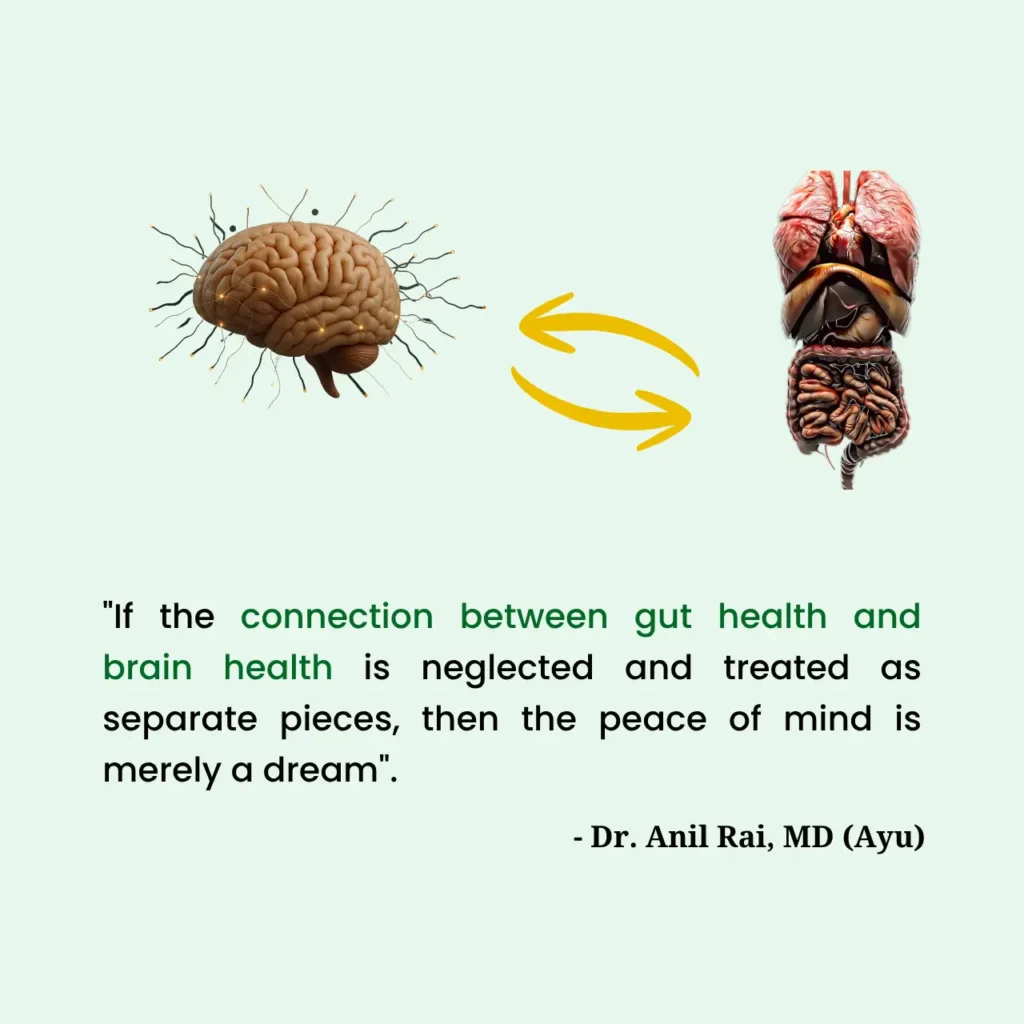
The state of your Agni (digestive fire) determines how you process not just food, but also emotions. If your digestion is sluggish, your mind becomes foggy. If it is overactive, your mind becomes irritable and anxious.
While explaining the mind, carakasamhitaonline.com mentioned the mental health and digestion connection as “the negative mental attitude adversely affects digestive health and leads to the production of toxic metabolites (ama), even though the meals are of proper quality and quantity”.
Remember these points
- Digestive Harmony: A balanced Agni ensures the production of Ojas, the essence of vitality and immunity.
- Serotonin Production: A significant portion of the body’s serotonin is produced in the gut, making digestive health a prerequisite for joy.
- Stress Response: High stress levels physically alter the gut microbiome, creating a feedback loop of anxiety.
Forgiveness as a Key to Calmness
Emotional intelligence – specifically acceptance and forgiveness – serves as a roadmap to happiness.
Let’s study them in detail
The Power of Radical Acceptance
Acceptance is often misunderstood as “giving up.” In reality, it is the most proactive thing you can do.
Radical acceptance means acknowledging the facts of a situation without the emotional resistance that causes suffering. If a project fails or a relationship is strained, fighting the reality of it only adds an extra layer of pain.
When we accept a situation as it is, we find the clarity needed to change it or the peace to move on. This helps us to differentiate the controllable and non-controllable aspects of life in every situation. Actions based on such clarity help us to prevent or cure from mind-related sufferings.
Acceptance doesn’t mean wrongly judging ourselves for feeling anxious or tired. Acceptance isn’t a way for escapism. Rather, acceptance, I mean here, to observe the reality as it is and act based on it.
Forgiveness as Personal Liberation
Haven’t you listened to this – Holding onto a grudge is like drinking poison and expecting the other person to die?
Forgiveness is not about letting someone “off the hook”; it is about unhooking yourself from the resentment.
Forgiveness also includes the self. Most achievers are often their own harshest critics, carrying guilt for “parenting mistakes” or perceived failures. Releasing this internal judge is essential for reclaiming your mental energy. When you forgive, you stop living in a state of internal conflict.
Professionally, forgiveness allows you to navigate work-life politics without carrying the emotional weight home. It enables you to see “enemies” as people acting out of their own imbalances. This perspective shifts you from a victim mindset to one of mastery and calm.
Cultivating Gratitude in a High-Pressure World
Gratitude is the neurological antidote to anxiety. It shifts the brain from a “lack” mindset to an “abundance” mindset.
In a world that constantly tells us we need more to be happy, gratitude is a radical act that grounds us in the richness of the present.
Consider these as non-negotiables to make the forgiveness logical and natural:
- Noting exactly why you are grateful for a career you’re in, a lifestyle you’re carrying, or a quiet morning that provides an opportunity to disconnect from all miseries.
- Recognizing that positive emotions physically strengthen your immune system and vitality.
- Unbiased attention for both what is missing and what is currently working.
- Consistent gratitude practice can rewire neural pathways to favor resilience over reactivity.
Kindly note, gratitude shouldn’t be a generic exercise. Being grateful for a clear mind after a session of breathwork, or for a supportive partner during a difficult quarter, makes the practice tangible.
Importance of Healthy Relationships
A successful life in the modern world heavily focuses on wealth creation and often neglects the importance of having healthy relationships in daily life.
Here is a detailed examination of how our primary connections, including conscious parenting, influence our inner peace and how to navigate social pressures.
Dynamics and Relationship Friction
Many professionals in the 30–52 age range find themselves in a “sandwich” situation – managing high-pressure careers while caring for aging parents and raising children.
This dynamic often leads to “relationship friction” caused by emotional instability. When your internal “cup” is empty, even minor interactions with a spouse or parent can feel like a burden.
According to the research “Fighting workforce friction to power productivity” from Dayforce, 88% of workers report that friction in their environment, including interpersonal conflict, directly impacts their productivity.
As you know, it won’t take much time to pass the career conflict to personal relationships, isn’t it?
If your primary relationships are a mess, it becomes a constant drain on your mental resources. Addressing this friction is not just about “trying to fix the other person” but about rejuvenating yourself at the same time.
Healing these connections requires a move toward empathy and understanding. This is very important because healthy relationships provide the emotional safety net required to excel in the professional world.
Careful Parenting
Careful or conscious parenting is the practice of being present and mindful in your role as a parent, rather than reacting out of your own past traumas or stress.
Many successful personalities feel deep guilt over “parenting mistakes,” often fearing that their work-life imbalance is negatively impacting their children. This guilt itself becomes a major barrier to peace of mind.
After helping multiple parents in their conscious and happy parenting journey, I’ve noted a few critical points that are non-negotiables in the era that the world is heading toward.
- Emotional Availability: Moving beyond “providing” to being truly present for a child’s emotional needs.
- Ending the Cycle: Recognizing and breaking patterns of stress-based parenting inherited from one’s own childhood.
- Self-Care as Parenting: Realizing that a calm, balanced parent is the greatest gift you can give a child.
- Resilience Modeling: Teaching children how to navigate stress by modeling healthy coping mechanisms yourself.
Data from the CDC’s Vital Signs report on Adverse Childhood Experiences (ACEs) suggests that children of parents who experience significant mental health challenges are at a higher risk for emotional and behavioral issues. However, the same research shows that “protective factors”- like having even one supportive, mindful adult can dramatically improve outcomes.
Careful parenting is an investment in your child’s future and your own current mental health.
Mindfully Activating Sensors
All of us are conscious about our vehicle sensors and their workings. But what about having working sensors that help in managing relationships?
These sensors aren’t mechanical parts like those in machines, but are the walls of your “inner space.” Without them, your energy will be constantly drained by the demands of others, leaving you with nothing for your own healing.
This is especially vital for professionals who struggle with “people-pleasing” or the pressure to be constantly available.
Learning to set boundaries with family and colleagues is a skill that requires action based on unbiased observation. It involves communicating your needs clearly and firmly without feeling the need to over-explain. A “no” to an unnecessary social obligation is a “yes” to your mental equanimity and family time at the same time.
The Integrative Roadmap: Ayurvedic Treatment for Mind and Body
This is an overview of the specific clinical treatments that bridge the gap between ancient wisdom and modern mental health needs in the journey of achieving mental peace.
Techniques and Integrative Psychiatry
Along with Satbabajaya Chikitsa in my practice, I utilize many techniques such as the “MOVERS” – a structured approach that integrates movement, oxygenation, vitality, emotional release, rest, and spirituality. This isn’t just about “wellness”; it is about clinical psychiatric care that addresses the whole person.
Many clients come to me with “normal” blood reports yet feel completely “wrong.” This is where integrative psychiatry shines. We look at the subtle imbalances in your Doshas (Vata, Pitta, Kapha), present dominance of mind’s nature (involving Satva, Rajas, Tamas), and how they manifest as anxiety, brain fog, or fatigue. It is a personalized roadmap designed for the passionate people who need high-performance results.
By combining clinical MD expertise with Ayurvedic principles, we can treat the root cause of “modern dis-easiness.” This approach is to be “pill-free” and sustainable, focusing on long-term vitality rather than temporary symptom management. It is about restoring your natural state of equanimity.
Ayurvedic Detox (Panchakarma) for Mental Clarity
Panchakarma is the ultimate “reset” for the mind and body. It is a five-fold detoxification process that removes “Ama” (toxins) from the cellular level. For a professional dealing with “information fatigue” and chronic stress, this physical cleansing is essential for mental clarity.
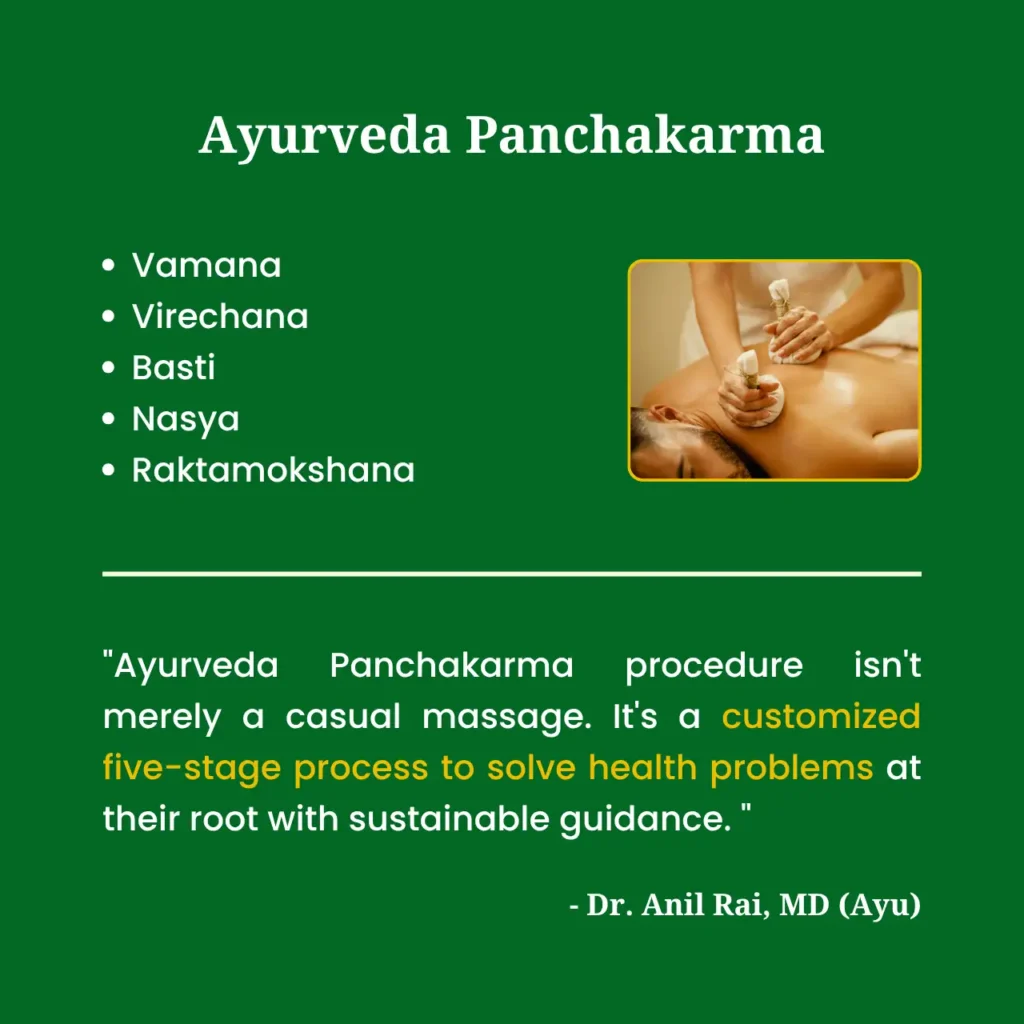
Recent research shows that specific Ayurvedic formulations and detoxification therapies like Panchakarma show significant efficacy in managing Generalized Anxiety Disorder (GAD). These treatments don’t just relax you; they physiologically shift your nervous system from “threat” to “thrive” mode.
Go through my in-depth guide on Ayurvedic Treatments, where you’ll find additional information regarding the best utilization of natural methods to be holistically healthy while living a fulfilled daily life.
Restoring Ojas and Balancing the Doshas
Ojas is the subtle energy that represents the body’s ultimate immunity and the mind’s ultimate resilience. When your Ojas is strong, you are stable, happy, and clear-headed. When it is depleted by overwork, poor sleep, and digital overload, you become fragile and easily overwhelmed.
Restoring Ojas involves more than rest; it requires the right nourishment and lifestyle. This includes “Sattvic” (pure) foods, herbal supports like Ashwagandha and Brahmi, and a routine that aligns with natural circadian rhythms. A clinical trial confirmed that standardized Ashwagandha root extract significantly reduces stress and improves psychological well-being. I suggest not consuming herbs without an Ayurveda expert’s guidance.
Balancing the Doshas – specifically calming Vata (the element of air and movement) – is the key to stopping the “spinning” mind. When your Doshas are in equilibrium, you no longer have to “work” at being happy; happiness becomes your natural baseline.
Sustainable Resilience: Nature, Self-Care, and Professional Guidance
Here’s a roadmap for integrating the important aspects into a busy lifestyle and knowing when to call in an expert.
Limiting Digital Overload and Information Fatigue
The “Burned-Out Visionary” is often drowning in data.
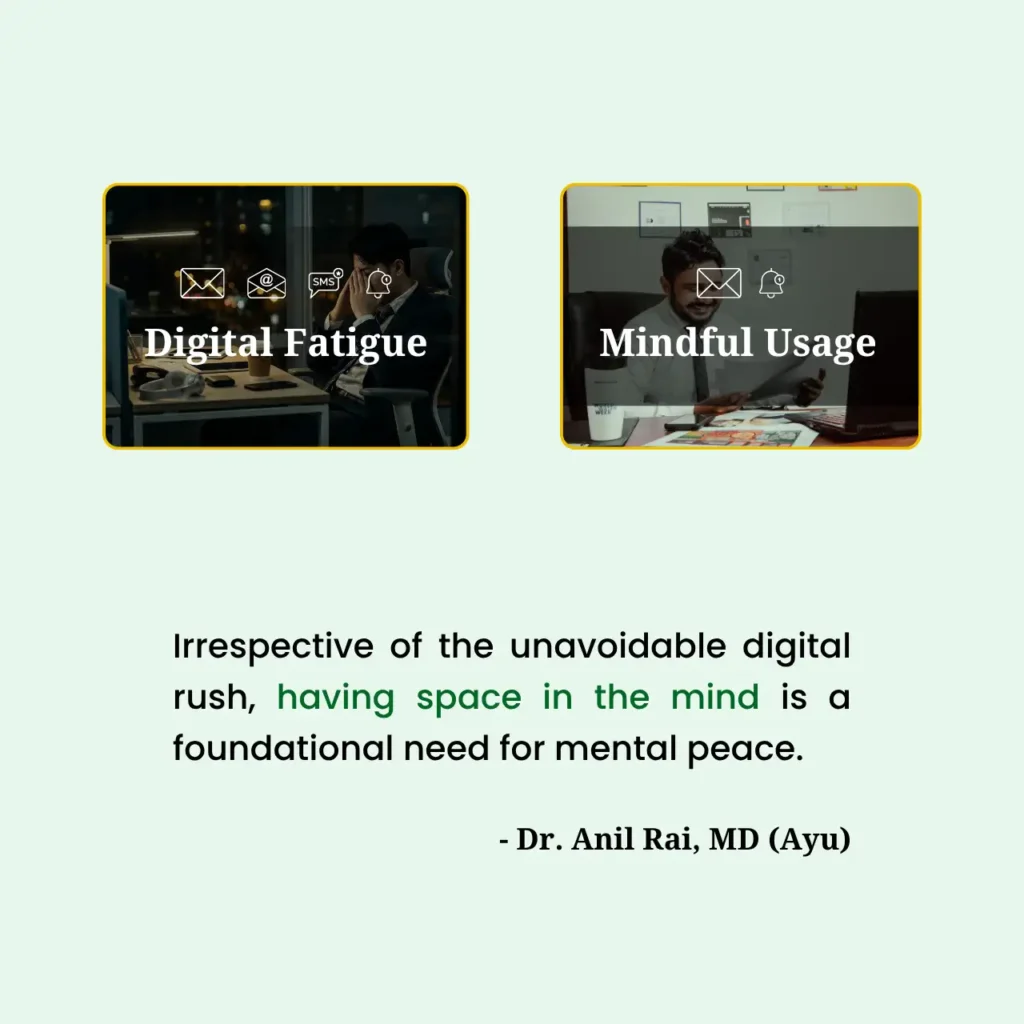
We are the first generation to carry the entire world’s problems in our pockets. This leads to a state of “digital fatigue,” where the mind feels permanently “full” but never satisfied. Setting strict digital boundaries is no longer optional; it is a clinical requirement for mental health.
Shift from passive consumption to active application is mandatory these days. One implemented technique is worth more than a thousand read articles. If you feel “status quo frustration”- the feeling that you are consuming wellness info but not feeling better. It is a sign that your information ecosystem needs a detox.
Limit your use of AI-powered search for “quick fixes.” While these tools are great for efficiency, they cannot replace the empathetic, expert-led roadmap provided by a professional. True healing happens in the space between the digital world and your unnecessary thoughts.
The Healing Power of Nature
We are biological beings living in a digital world. The disconnect from natural rhythms of light, air, and earth is a major contributor to modern stress. “Forest bathing” or simple “green time” isn’t just a leisure activity; it’s a way to reset your circadian rhythms and lower cortisol levels.
- Sunlight Exposure: 10–15 minutes of morning sun to regulate melatonin and improve mood.
- Grounding: Physically connecting with the earth to reduce systemic inflammation.
- Rhythmic Alignment: Living in accordance with Rutucharya (seasonal routines) to prevent seasonal affective shifts.
- Soft Fascination: Allowing the mind to rest in natural environments, which restores cognitive resources depleted by screens.
Nature provides a “soft fascination” that allows the mind to rest. Unlike the “hard fascination” of a computer screen, which demands focused attention and drains energy, nature restores our cognitive resources. This is essential for professionals who need to maintain a high level of decision-making capability.
When to Seek Professional Ayurvedic Psychiatry
There comes a point where self-help and “random information” from the internet are not enough.
If you are experiencing chronic burnout, persistent relationship friction, or physical symptoms despite “normal” medical reports, it is time for a professional intervention.
This approach doesn’t just treat symptoms; it identifies the “root cause” of your dis-easiness. Whether it’s through Panchakarma to detoxify the body, Satvavajaya Chikitsa for mental clarity, or personalized lifestyle coaching, professional help provides the “Experience and Expertise-based practical solutions required for true transformation.
Seeking help is a sign of high intelligence and self-awareness. It shows that you value your time and your health enough to invest in an expert roadmap rather than struggling alone. Your peace of mind is too valuable to be left to chance.
Let’s look at some common questions that arise when we talk about mental health and calmness.
Frequently Asked Questions (FAQs):
Conclusion
Asking how to find peace of mind and happiness in the modern world is not to escape reality, but about engaging with it more skillfully.
By understanding the nature of your mind, honoring your body’s biological needs, and nurturing healthy, conscious relationships, you can achieve a state of equanimity that is “pill-free” and sustainable.
True vitality comes from the inside out. Your career, your family, and your future all depend on the stability of your internal world.
As you move forward, remember that if you’re struggling too much, you don’t have to navigate this path alone. The journey from “Burned-Out Visionary” to “Balanced Visionary” is possible with the right expert-led roadmap.
Share this piece of content with your peace-of-mind searching friend.
Share via social media

Author
I am Dr. Anil Rai, Ayurvedic Physician and Mental Health Practitioner with over 2 decades of experience and knowledge. I help the needy cure and prevent mental discomfort through natural healing and alternative medicines. Read more about my profession and background. Let’s be connected socially to spread holistic health.